Care for Teeth and Gums Together
A minty taste is a sensation, not a complete measure of oral health. Cosmetic mouthwash can temporarily freshen breath without reducing the risk of tooth decay or gum disease. Cleaning and dental assessment have different jobs from simply making the mouth feel fresh.
Plaque is a sticky film of bacteria. If it is not removed, it can irritate gums and harden into tartar. Gum disease affects the tissues supporting teeth, so care needs to reach the gumline and the spaces between teeth as well as the surfaces you can easily see.
Our guide to why brushing twice a day matters covers the brushing recommendation. Here, the focus is what sits alongside it.
Clean Between Teeth Daily
Clean between teeth daily, not only when food feels stuck. Floss or a suitable interdental cleaner removes plaque and food from areas a toothbrush cannot fully reach.
Choose the tool to fit the space and your ability to use it. Floss may suit close contacts; interdental brushes can suit larger spaces. Ask a dentist to show you the right size and technique rather than forcing a tool through a tight gap.
With floss, guide it gently between teeth, curve it around one tooth and move along its side. Avoid snapping it into the gums. A demonstration can make an unfamiliar movement much easier to understand.
Food Choices and Mouthwash
A balanced diet that limits sugary drinks and snacks is another part of caring for teeth. Look at your usual day, including sweetened drinks and snacks between meals, rather than relying on a new oral-care product to do all the work.
Mouthwash may be useful for some people, but it does not replace brushing or cleaning between teeth. Ask whether you need one and what purpose it would serve. More products do not automatically make a routine more useful.
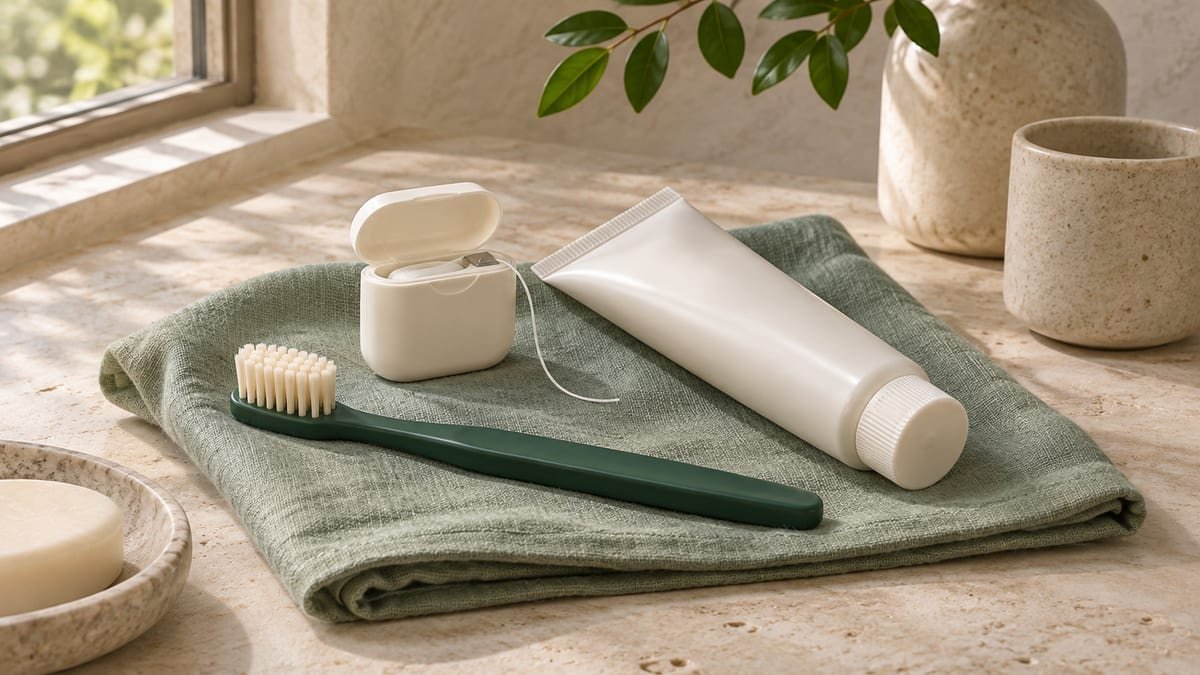
Keep the routine manageable: a suitable brush, fluoride toothpaste, an interdental tool you can use and time to use them carefully. For help choosing and using your brush, read good brushing habits and appropriate product choices.
Dental Checks and Gum Warning Signs
Home care and dental checks work together. An assessment can identify problems and help tailor advice to your teeth, gums and current habits. The timing of the next check should reflect your needs, rather than a schedule copied from someone else.
If your gums bleed, become sore or swollen, arrange a dental assessment. Persistent bad breath also deserves attention. Describe what you have noticed and how long it has been happening instead of only trying to cover it with a stronger flavour.
Explore general and family dentistry, including preventive care for the wider role of assessment and advice.
Questions About the Wider Routine
Can I remove tartar by brushing more firmly?
No. Once plaque has hardened into tartar, professional cleaning is needed to remove it. Continue gentle daily cleaning and discuss any deposits with a dentist. Do not try to scrape them off yourself.
What if cleaning between my teeth hurts?
Do not force the tool or snap floss into the gums. Ask a dentist to check the technique and whether the tool fits your spaces. Pain that continues needs advice, rather than simply switching to more pressure.
Do I need a check-up if nothing hurts?
Yes, routine checks have a role even when you have no symptoms. A dentist can assess your teeth and gums and recommend an appropriate review interval. If a new problem develops between checks, contact a dental practice rather than waiting for the planned review.
Bring Your Routine into the Conversation
Note any bleeding, discomfort or areas you find difficult to clean. Taking those details to a dental visit gives you a useful starting point for practical advice.
Prepare for a dental visit Back to all oral-care guidesFurther reading: NHS guidance on keeping your teeth clean, NIDCR guidance on oral hygiene and ADA guidance on home oral care.